Getting Planning Permission in Cork County: What Nobody Warns You About
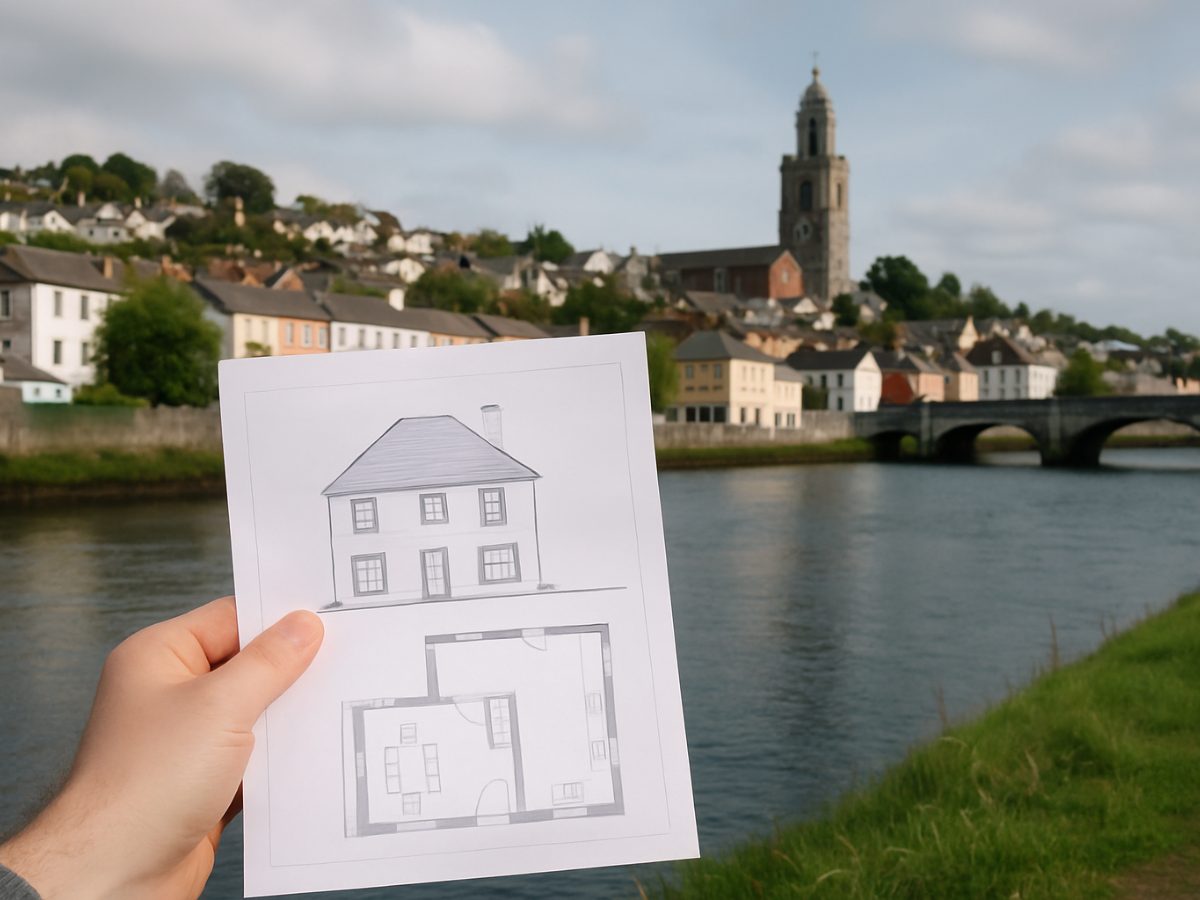
Planning permission in Cork county is one of those things that seems straightforward until you're actually in the middle of it. The official process looks fine on paper. Eight weeks, submit your drawings, wait for a decision. What nobody tells you is the eight weeks is only the start of the story, and there are at least a dozen ways to slow yourself down before the council even opens your file.
We've seen this happen to enough people around Cork, whether in the city fringes, out west in places like Macroom or Bantry, or on sites along the harbour, to know where the same mistakes keep appearing. Here's what they were, and what to do differently.
Not checking your site's zoning properly before spending anything
The first mistake is paying an architect or drawing up plans before you've confirmed what your site is actually zoned for. Cork County Council's county development plan is publicly available and is updated every few years. Rural areas are broken into zones, and what's permissible in a rural settlement node is different to what's allowed in open countryside. One-off housing in the open countryside, in particular, comes with specific local need criteria that catch people out constantly.
If you're building in a rural area and you're not originally from the locality or you can't demonstrate a genuine connection to it, you may not qualify for permission at all, regardless of how good your design is. Find that out before you pay anyone to draw a thing.
Underestimating how much the pre-planning meeting matters
Cork County Council offers pre-planning consultations and a lot of applicants skip them or treat them as optional. They're not. A pre-planning meeting gives you direct access to the planner dealing with your area and it often surfaces problems that would otherwise only appear as a request for further information after you've submitted, which eats weeks.
The meeting is relatively low cost and you can book it through the council's planning department. Bring your site map, a rough sketch of what you're proposing, and any existing site investigation reports if you have them. The planner won't give you a binding decision, but they'll tell you if something is going to be a problem. That information is genuinely useful and it's free in any practical sense.
Getting the site notice wrong
This is a small thing that causes big delays. Every planning application in Ireland requires a site notice, a physical notice fixed to the site, and a newspaper notice in an approved local paper. For Cork County, that approved list includes specific publications and your notice has to appear before or on the day you submit.
The notice wording has to match your application exactly. If the description of the development on your notice says "two-storey dwelling" and your application form says "two-storey detached dwelling," that mismatch can invalidate your application. The council will return it as invalid and your timeline resets completely. Read the requirements carefully, copy the wording precisely, and keep a copy of the newspaper page as proof.
Missing what the planners actually focus on locally
General planning guides talk about things like overlooking, scale, and design. All of that applies in Cork too, but there are local emphases that generic advice won't flag. Along coastal areas in West Cork and the southern shore of Cork Harbour, visual impact from the water and from elevated ground is something planners take seriously. If your site is visible from a scenic route or a designated landscape area, expect that to come up.
Septic tank suitability is another one that bites people in rural Cork. If your site percolation tests come back borderline, you might need to redesign the wastewater treatment system entirely before you get a grant of permission. Get your site suitability assessment done early, not at the last minute.
Ignoring third-party observations
Anyone can make an observation on a planning application in Ireland by paying a small fee. In practice most applications go through without any, but in rural areas where neighbours are few and relationships can be complicated, an observation from an adjoining landowner can significantly affect your application. It doesn't automatically mean refusal, but planners must consider it and may seek your response.
If you're in a situation where you know a neighbour has concerns, talking to them before you submit is nearly always better than getting a formal observation after. Not every conversation will go well, but it can sometimes resolve the problem without it ever reaching the planner's desk.
Not reading your grant of permission carefully enough
When permission comes through, people sometimes file it away and start building. Read every condition on that grant. Cork County Council decisions routinely include conditions requiring you to submit landscaping plans, boundary treatment details, or construction management plans before you start work. If you ignore those and begin building, you're technically in breach of your permission, which creates problems if you ever need to sell or remortgage.
Also check whether there's an appeal lodged. The four-week appeal window from the date of the decision means your permission isn't final until that period passes without challenge. Starting work before then is a risk that isn't worth taking.
Plan for the process to take longer than the stated eight weeks. Most applications that run smoothly still take four to five months once you factor in pre-planning, the statutory period, and the appeal window. Build that into your schedule from the start.